If you’ve ever noticed a horizontal groove running across one or more of your nails, you may have been looking at Beau’s lines. These lines aren’t just cosmetic changes—they’re physical records of a time when your body temporarily slowed nail growth due to stress, illness, or systemic disruption.
Understanding Beau’s lines can help you make sense of what your body went through—and when.
What Are Beau’s Lines?
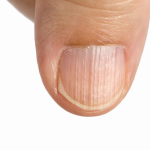
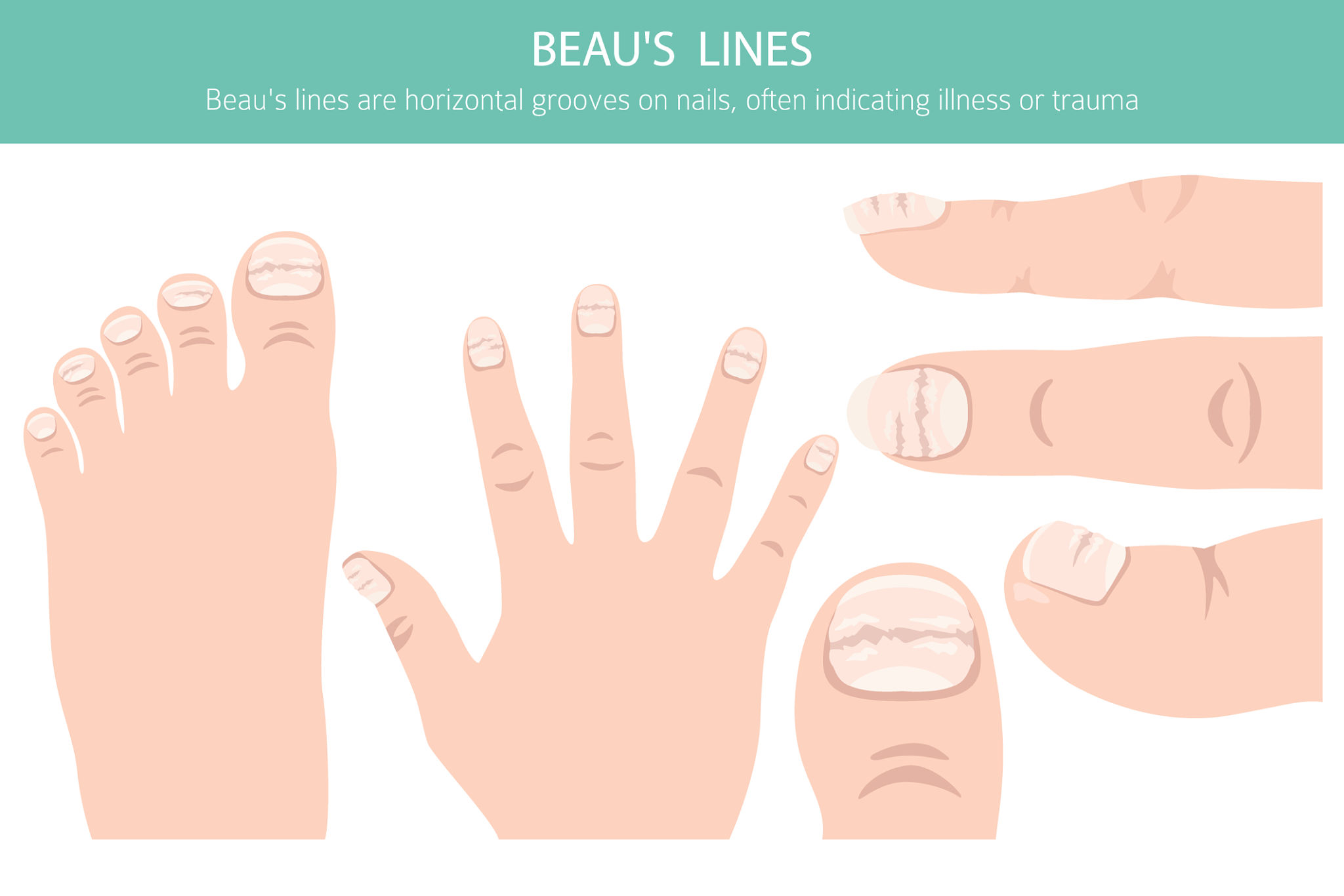
Beau’s lines are horizontal depressions or grooves that extend across the nail plate. Unlike vertical ridges, which are common and often harmless, Beau’s lines signal a temporary interruption in nail growth at the nail matrix.
When nail production pauses or slows, the nail resumes growing later—leaving behind a visible groove that slowly moves forward as the nail grows out.
What Causes Beau’s Lines?
Anything that significantly stresses the body can cause Beau’s lines. Common triggers include:
- High fever or severe infection
- Major physical illness or surgery
- Significant emotional or psychological stress
- Severe nutritional deficiencies
- Chemotherapy or certain medications
- Uncontrolled chronic conditions
The key factor isn’t the specific cause—it’s the intensity of the stress placed on the body.
Timing: Nails as a Biological Timeline
One of the most fascinating things about Beau’s lines is that they can help estimate when the stress occurred.
Fingernails grow about 3 mm per month. The distance between the Beau’s line and the cuticle can roughly indicate how long ago the growth interruption happened.
For example:
- A line halfway up the nail likely reflects an event from 2–3 months ago
- A line near the tip may point to something that happened 4–6 months earlier
In this way, nails quietly archive your body’s history.
Are Beau’s Lines Serious?
Not always—but context matters.
Usually benign when:
- They appear on one or two nails
- You can link them to a known illness or stressful event
- They grow out normally over time
Worth medical attention when:
- They appear on many or all nails at once
- They recur repeatedly
- They’re paired with fatigue, weight changes, hair loss, or other systemic symptoms
Widespread Beau’s lines can sometimes point to systemic or metabolic issues that deserve evaluation.
Beau’s Lines vs. Other Nail Changes
It’s easy to confuse Beau’s lines with other nail markings, but there are key differences:
- Beau’s lines: horizontal, indented, reflect past growth interruption
- Vertical ridges: lengthwise, common with aging, usually harmless
- White lines/spots: often related to trauma or minor keratin disruption
The horizontal direction is what makes Beau’s lines distinctive.
Do Beau’s Lines Go Away?
Yes—they grow out.
Because the underlying issue is temporary, no special treatment is needed for the nail itself. As long as nail growth resumes normally, the groove will gradually move forward and eventually be trimmed away.
The focus should be on addressing the underlying cause, not the nail appearance.
Supporting Nail Recovery
To support healthy regrowth:
- Eat adequate protein and micronutrients
- Keep nails moisturized to prevent splitting along the groove
- Avoid aggressive manicures or gel removal while the line grows out
- Manage stress and prioritize recovery after illness
Patience matters—nails take time to tell their full story.
Final Thoughts
Beau’s lines are reminders that your body keeps score—even in subtle places. They don’t mean something is wrong now, but they do reflect something your body endured in the past. Paying attention to these signs can deepen your understanding of your health and recovery.